

2024 Film Reviews
Queer (2024) Review‘Queer’ (2024), the Luca Guadagnino film adaptation of William S. Burroughs’ work starring Daniel Craig, is an important and unflinchingly queer film. Review by Jacob Davis.
The Lord of the Rings: The War of the Rohirrim (2024) ReviewAs pleasing as it is to return to Rohan for anime Tolkien adaptation ‘The Lord of the Rings: The War of the Rohirrim, the film does feel less than essential. Review by Sam Sewell-Peterson.
Y2K (2024) ReviewSNL alum Kyle Mooney directs and co-writes alternative history teen comedy ‘Y2K’, an enjoyable but unbalanced and forgettable film starring Jaeden Martell, Rachel Zegler. Review by Margaret Roarty.
Conclave (2024) ReviewEverything about Edward Berger’s Catholic thriller ‘Conclave’ (2024) is stellar, including the career-high lead performance of Ralph Fiennes. Review by Kieran Judge.
Spellbound (2024) ReviewSkydance Animation’s sophomore release ‘Spellbound’ (2024), on Netflix, features some all-time great animated movie voices and is brilliantly creative. Review by Joseph Wade.
The Piano Lesson (2024) ReviewMichael Washington’s feature directorial debut ‘The Piano Lesson’ (2024) is a family affair starring John David Washington, that doesn’t reach the heights it promises. Review by Martha Lane.
Wicked (2024) ReviewThe silver screen debut of famed stage musical ‘Wicked’ is lacking visual creativity but features some unforgettable performances and all the songs fans know and love. Review by Margaret Roarty.
Gladiator II (2024) ReviewRidley Scott’s sequel 24 years in the making, ‘Gladiator II’, serves spectacle but lacks depth. It is a mixed but decidedly entertaining historical epic. Review by Sam Sewell-Peterson.
The Remarkable Life of Ibelin (2024) ReviewBenjamin Ree’s feature documentary ‘The Remarkable Life of Ibelin’, is the moving and sensitive telling of Mats Steen’s second life in MMORPG ‘World of Warcraft’. Review by Sam Sewell-Peterson.
The Front Room (2024) Review‘The Front Room’ (2024), from Max and Sam Eggers, is devoid of anything emotionally or intellectually engaging; barely even an A24 film. Review by Kieran Judge.
One Life
Drama ****
Read less, know more
Discover everything you need to know in one balanced read, with The Week magazine.
Try 6 free issues today.

“You’d need a heart of stone not to be touched” by “One Life”, which tells the extraordinary story of Nicholas Winton, the “British Schindler” who helped evacuate 669 mostly Jewish children from Czechoslovakia on the eve of the Second World War, said Peter Bradshaw in The Guardian. After the war, Winton virtually never mentioned his rescue effort, even to his family. It only came to public attention in 1988, when he appeared in an episode of “That’s Life!”, in which Esther Rantzen asked members of the audience to stand up if they owed him their life – and dozens of people sitting around him silently rose to their feet. This “quietly affecting drama”, made with “simplicity and heartfelt directness” by director James Hawes, does justice to that “overwhelmingly moving event”.
Winton is played in the 1980s by Anthony Hopkins and in the 1930s by Johnny Flynn, both of whom turn in performances that are worthy of “a remarkable and almost comically modest man”, said Ed Potton in The Times. The film also has a “secret weapon” in Helena Bonham Carter, who plays Winton’s German émigrée mother, Babette. She is “formidable with a capital F, storming into the London visa office in her fur coat and putting obstructive civil servants firmly in their place (‘Sit down young man, I have something to tell you’)”. With its “syrupy strings and somewhat grey palette”, “One Life” does have “more than a hint of BBC TV drama about it”, said Hamish MacBain in the Evening Standard. But Hopkins is “superb”, imbuing every frame with “warmth and wit and sadness and charming British eccentricity”. Anyone who doesn’t “blub their way through” the last half-hour “should be checked for a pulse on the way out”.
Priscilla
Drama ***
“Priscilla”, Sofia Coppola’s film about Elvis Presley’s courtship of his future wife, Priscilla Beaulieu, which started when he was 24 and she was 14, “will make for uncomfortable viewing for fans of the King”, said Geoffrey Macnab in The Independent. The film presents Elvis (Jacob Elordi) “as an insecure narcissist” who started to fixate on Priscilla (Cailee Spaeny) when they met at a party during his military service in Germany, and who was unwilling to give her “any independence” once they’d married. Adapted from Presley’s memoir “Elvis and Me”, the film is a “downbeat and dour affair, with little of the exuberance” of Baz Luhrmann’s 2022 biopic “Elvis” – though Spaeny gives a “compelling and moving performance” as a bright young woman “whose spirit is slowly crushed”.
“With the exception of the totally brilliant ‘Lost in Translation’, I’ve never really got on with the films of Sofia Coppola, and this modest antipathy continues with Priscilla,” said Matthew Bond in The Mail on Sunday. “The drama feels flat and episodic”; and Elordi and Spaeny’s performances left me cold. It’s “lushly styled”, said Adrian Horton in The Guardian, but provides “little sense” of who its heroine was, and what she thought of the things that happened to her. “The real Priscilla was, by all accounts, no wallflower.” But in “this absorbing yet frustrating film”, you could easily mistake her for one. I found “Priscilla” a “little dull”, said Alistair Harkness in The Scotsman. “Neither a scathing post-#MeToo take-down of ‘the King’ nor a particularly deep character study of a teenager groomed from the age of 14 to become his doll-like wife, it is, instead, another of Coppola’s dramatically inert explorations of life in a gilded cage.”
Ferrari
Biopic ***
Back in “Italian biopic mode”, Adam Driver has “dusted off his Dolmio Man accent” from “House of Gucci” to play Enzo Ferrari in this handsome “but ultimately quite empty drama from the veteran filmmaker Michael Mann”, said Kevin Maher in The Times. We first meet our “racing-obsessed hero” in 1957. He has run his eponymous car business into the ground, and in order to attract new investors, he desperately needs one of his drivers to win the “epic and lethal road race, the Mille Miglia”. The race itself is powerfully depicted, but alas the film is altogether too preoccupied with the impact of the death of Enzo’s son, Alfredo, from muscular dystrophy in 1956. Enzo is defined “solely in terms of parental grief. In short, he starts the film suffering from parental grief, he negotiates his relationships in the shadow of parental grief, then he ends the film, after the Mille Miglia, with slightly less parental grief.” Driver, for all his talents, proves “unable to bring anything unexpected or challenging to this template”.
“As in a racing-car engine, there are lots of components in this film, and they all need to work in perfect sync, which occasionally they don’t,” said Brian Viner in the Daily Mail. Still, it’s “tremendously stylish”, and for the most part Mann does a “fine job”: one crash scene is so devastating, it caused a sharp “intake of breath” at the showing I went to. Elsewhere, the film can be “ponderous”, said Kyle Smith in The Wall Street Journal. But its third act is “thrilling”, and Penélope Cruz delivers a “standout” performance as “the impassioned Signora Ferrari”.
Tchaikovsky’s Wife
Drama ***
“The unhappy union between the composer Pyotr Tchaikovsky (Odin Biron) and his wife, Antonina Miliukova (Alyona Mikhailova), is the jumping-off point” for this “feverish” period piece from the Russian director Kirill Serebrennikov, said Wendy Ide in The Observer. The film, which has only “a passing acquaintance” with the facts of Tchaikovsky’s “turbulent life”, begins with his death, before rewinding to the start of his and Antonina’s romance. It is a “punishing watch at times”, but its ambition is “admirable”. Serebrennikov is an “extravagantly talented director whose opposition to Kremlin ideology led to a two-year house arrest”, said Jonathan Romney in the FT. “But even while laying siege to a national monument of male genius, “Tchaikovsky’s Wife” has the leaden institutional feel of a prestige superproduction.” There is “a crazed magnificence” to its lavish evocation of the period; yet there is “little real drama here, just flamboyant gesticulations at it”.
I found the movie a “chore”, said Robbie Collin in The Daily Telegraph. “Watching it feels like competing in a sort of arthouse cinema Krypton Factor, with a barrage of interpretative dance interludes, unflinching full-frontal male nudity, pulverisingly bleak mise en scène, and writhing mental collapse.” One scene actually manages to combine all of the above. The film has an “expansive, 140-minute running-time”, and there are points when it is hard to work out exactly what’s going on in it, said Trevor Johnston in Time Out. “But with its intensely felt performances, haunting winter lighting, and seemingly inescapable claustrophobia, it leaves a mark.”
2023 Film Reviews
The best films of 2023 to look forward to
New movies from Martin Scorsese, Wes Anderson, Sam Mendes, Greta Gerwig and Florian Zeller, among others, mean there’s a feast of cinema in the coming months
by Peter BradshawFri 30 Dec 2022 06.00 GMT
A Man Called Otto
A bittersweet heartwarmer remade from a Swedish film called A Man Called Ove, starring Tom Hanks as a grumpy old bore who, after his wife dies, sees no reason to carry on. His repeated attempts at taking his own life are farcically interrupted and then a new friendship looks as it if will change things.
6 January
Alcarrás
This richly humane picture, set in Alcarrás in Catalonia, from Spanish director Carla Simón won the Golden Bear at last year’s Berlin film festival. An agricultural community and a family is set at odds when there is a plan to install solar panels on land where a peach orchard used to be.
6 January
Till
Danielle Deadwyler (from last year’s western thriller The Harder They Fall) stars in this historical drama from Chinonye Chukwu. She plays Mamie Till, an African American woman who became acivil rights activist in 1955 after her 14-year-old son Emmett was brutally murdered by racists, supposedly for whistling at a white girl.
6 January
Empire of Light
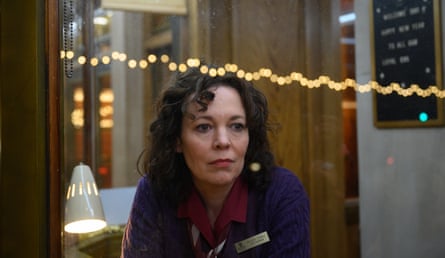
Olivia Colman goes all out in this heartfelt movie, set in the early 1980s, written and directed by Sam Mendes. She plays Hilary, a depressed cinema manager in a seaside town who has a passionate affair with the new ticket seller, a black man played by Micheal Ward.
9 January
Enys Men
Cornish auteur and experimentalist Mark Jenkin has created this eerily compelling prose-poem of a film, set in 1973 on a remote island (the Cornish title means “stone island”). Mary Woodvine plays a woman whose solitude causes her to spiral downwards into dreams and memories.
13 January
Tár
This sensational and hypnotic movie stars Cate Blanchett as the fictional principal conductor of a major German orchestra: demanding, passionate, mercurial, brilliant. Rumours of affairs and exploitation follow her and the film tracks her increasingly intense state of mind as she heads for a creative breakthrough or a breakdown.
13 January
Babylon
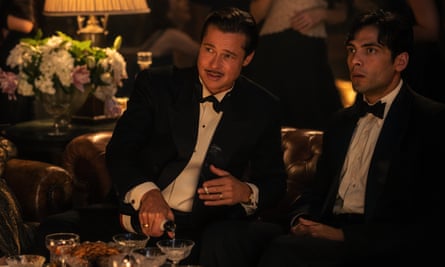
The boy wonder of modern Hollywood Damien Chazelle has never been shy of taking on the mightiest of American myths. His new film, in the spirit of Kenneth Anger’s Hollywood Babylon, is a three-hour-plus epic of semi-fictional bad behaviour in golden age Hollywood, with Brad Pitt, Margot Robbie and many more.
20 January
The Fabelmans
Steven Spielberg has never been more personal than in this quasi-autobiographical film about a young Jewish kid called Sammy Fabelman, who is exploring his own childhood and young adulthood, using film to make sense of the world and his troubled family. Michelle Williams has been much praised as Sammy’s mother, Mitzi.
27 January
All the Beauty and the Bloodshed
The Sackler family is America’s big pharma dynasty, who made a mega-fortune from the addictive opioid pill OxyContin, and artwashed their brand by donating to thousands of galleries. This documentary is about photographer Nan Goldin, who got hooked on the substance and then led a campaign to hold the Sacklers to account.
27 January
EO
Veteran auteur Jerzy Skolimowski has made a heartfelt movie in homage to Robert Bresson’s Au Hasard Balthazar – the story of a donkey called EO (after its braying “eeeee-ohhh” sound). EO has a dizzying succession of adventures: the intimate witness of human vanity.
3 February
The Whale
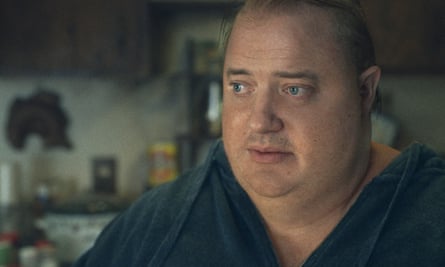
Brendan Fraser has been greeted with rapturous applause at festivals the world over for his performance in this movie about an English teacher who has extreme weight gain and depression, and conducts Zoom classes with his camera switched off.
3 February
Saint Omer
French-Senegalese director Alice Diop gives us a no-frills courtroom drama. A Senegalese writer attends the trial in France of a Senegalese woman accused of murdering her 15-month-old child. She intends a kind of reportage spun around the Medea myth, but soon realises that her connection with the accused runs deeper than this.
3 February
Women Talking
An all-star cast including Rooney Mara, Claire Foy and Jessie Buckley feature in this searingly tough proto-#MeToo drama inspired by the story of women in a remote religious community in Bolivia who were repeatedly drugged and raped by their menfolk; they discovered the truth by talking among themselves.
10 February
Blue Jean
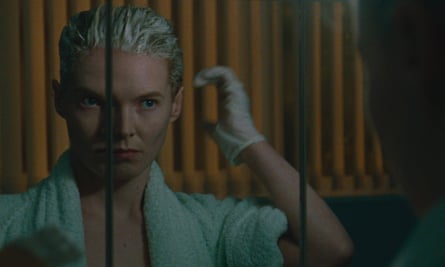
First-time British director Georgia Oakley has created a much-admired movie about the homophobia of Margaret Thatcher’s Britain in the era of Section 28. Rosy McEwen plays a gay teacher who has to conceal her sexuality for fear of harassment or even dismissal – but a pupil challenges her to rethink her avoidant attitude.
10 February
The Son
Once again, The Father’s Florian Zeller directs a laceratingly painful movie, adapted by Christopher Hampton from Zeller’s own stage play. Hugh Jackman plays a high-flying lawyer with a second wife whose troubled teen son from his first marriage comes to stay with him; the situation descends into a nightmare.
10 February
Creature
This movie from Asif Kapadia is a boldly presented dance piece, inspired by Woyzeck and Frankenstein and conceived in collaboration with the English National Ballet and dancer-choreographer Akram Khan. A created being, interpreted by Jeffrey Cirio, comes to life and yearns for love.
24 February
Broker
Award-winning Japanese film-maker Hirokazu Kore-eda gives us a road-movie heartwarmer set in Korea, starring Song Kang-ho from the Oscar-winning Parasite. He is a “broker” on the adoption parallel market, stealing unwanted newborns from a church’s “baby box” and putting them up for sale.
24 February
Cocaine Bear

Elizabeth Banks directs this black comedy-thriller based on the bizarre true story of the American black bear (later dubbed the “ultimate party animal” and “Pablo Escobear”) that ate an entire duffel bag of cocaine which it found in Kentucky’s Chattahoochee national forest, dumped by a fleeing drug-runner.
24 February
Boy From Heaven
Modern Egypt is the setting for this conspiracy espionage-drama from director Tarik Saleh, who gives us intriguing hints of John le Carré. A humble fisher’s son is thrilled to get a scholarship to study Islamic thought at Cairo’s prestigious Al-Azhar University, but stumbles on corruption and murder.
10 March
The Super Mario Bros Movie
The Super Mario movie from 1993 – with Bob Hoskins tackling the uniquely challenging lead role – was widely considered to be unsatisfactory. Now we have a new big-screen adaptation of the Nintendo game with Chris Pratt as the little plumber Mario – with an accent that some have dubbed Paulie Walnuts-lite.
31 March
Guardians of the Galaxy Vol 3
Having been forgiven and rehired after a row concerning offensive tweets – and since elevated even further to command rival superhero factory DC – James Gunn directs the third movie in Marvel’s Guardians of the Galaxy franchise, featuring the quirky underdogs that unexpectedly became box office gold. Chris Pratt is back as Peter Quill, who must rally his pals for a new mission.
5 May
The Little Mermaid
Screenwriter Jane Goldman and director Rob Marshall have taken on a very big project: a live-action version of one of the best-loved Disney animations, The Little Mermaid. Halle Bailey is Ariel, the mermaid princess who falls in love with the human prince she rescues from a shipwreck.
26 May
Spider-Man: Across the Spider-Verse
One of the superhero world’s most intriguing developments is this freakily imaginative animated offshoot from the live-action Spider-Man franchise, set in a multiverse-type Spider-Verse of alternative realities concerning the arachnid crime fighter. This second film has Oscar Isaac voicing a future-world Spidey from 2099.
2 June
Indiana Jones and the Dial of Destiny
At a mere 80 years old, Harrison Ford is back as Indiana Jones, with Phoebe Waller-Bridge playing his goddaughter. Jones is now living through the space age: it is 1969 and the moon landing is imminent. Having last encountered Hitler in Indiana Jones and the Last Crusade, our hero little thought that nazism would yet again be a problem. But now he is deeply concerned at someone from Nazi Germany being involved in the space programme – the sinister engineer Voller, played by Mads Mikkelsen.
30 June
Oppenheimer

Cillian Murphy plays the US scientist who, in his own endlessly requoted words citing Hindu scripture, became death, the destroyer of worlds. This is J Robert Oppenheimer, the physicist who masterminded the US Manhattan Project and created nuclear weapons, in the new epic from Christopher Nolan.
21 July
Barbie
Advance photos of Margot Robbie and Ryan Gosling in character earlier this year almost caused the internet to melt down. Robbie is the demure blond Barbie based on the Mattel toy in Greta Gerwig’s movie and Gosling is her paramour, Ken.
21 July
A Quiet Place: Day One
John Krasinski’s original movie A Quiet Place now decisively morphs into a franchise, for good or ill. We are back for a third film in a stricken future where Earth has been invaded by sinister predators which, although effectively blind, can sense the tiniest of noises.
8 September
Dune: Part Two
Here is the second half of Denis Villeneuve’s colossal adaptation of Frank Herbert’s classic SF novel, with Timothée Chalamet returning as Paul Atreides, in love with Zendaya’s Chani and making common cause with the Fremen while battling the cabal who destroyed his family.
3 November
The Old Oak
British cinema grandee Ken Loach is back, his energy and anger at injustice undimmed. With screenwriter Paul Laverty, he now gives us a new drama set in a former mining community whose pub, The Old Oak, is the last community meeting place, and becomes the focus of tension when Syrian refugees arrive.
The Eternal Daughter
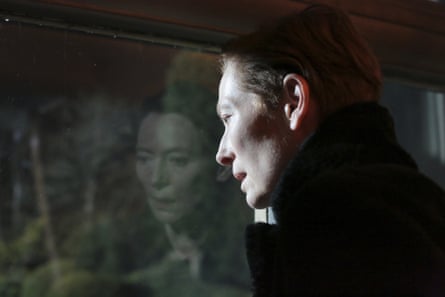
Here is a ghost story from Joanna Hogg whose purpose is something other than scaring you – with a doppelganger mystery to reflect on the enigma of your parents’ inner lives. Tilda Swinton gives a witty dual performance as a film-maker who brings her elderly mother to a hotel for her birthday.
Master Gardener
This film from Paul Schrader is the third in a purported trilogy, after First Reformed and The Card Counter. It once again features a driven, haunted individual with a vocational obsession. Joel Edgerton plays a gardener with a violent past; he has a strange relationship with his employer, played by Sigourney Weaver.
Killers of the Flower Moon
A new Scorsese movie is always an event – his new one is a thriller based on the true story of how the nascent FBI in the 1920s investigated the murders of Native American Osage people in Oklahoma; they were being killed to stop them getting the oil profits to which they were entitled. It is based on the nonfiction bestseller by David Grann (whose The Lost City of Z inspired the film by James Gray). Robert De Niro plays cattle baron William Hale, Leonardo DiCaprio is his nephew Ernest Burkhart and Jesse Plemons is FBI man Tom White.
Asteroid City
Do “junior stargazer events” exist in real life? Perhaps it took Wes Anderson to invent them. His new film is set at an astronomy convention for eager teens in a fictional US desert town in the 1950s, where something momentous and strange happens. The movie itself, co-written by Anderson with Roman Coppola, was made at a Spanish studio under Covid-bubbled conditions two years ago, with Margot Robbie, Tom Hanks, Scarlett Johansson, Tilda Swinton and many others.
2022 Film Reviews
Avatar: The Way of Water (2022) ReviewJames Cameron’s sequel thirteen years in the making, ‘Avatar: The Way of Water’ (2022), looks “absolutely gorgeous” but lacks the originality of the first ‘Avatar’. Review by Kieran Judge.
Cost of Living (2022) Short Film ReviewCinema and Social Justice Project short film ‘Cost of Living’ (2022) is an emotive contextualisation of our contemporary struggle through archive footage. Review by Joseph Wade.
Guillermo del Toro’s Pinocchio (2022) Review‘Guillermo del Toro’s Pinocchio’ (2022) is a vivid and hard-hitting reimagining of a classic story, presented in stop-motion animation for Netflix. Review by Sam Sewell-Peterson.
Violent Night (2022) ReviewTo David Harbour’s rendition of Santa Claus in the delightfully subversive ‘Violent Night’ (2022), Christmas is about “getting violently drunk and kicking ass”. Review by Emi Grant.
Falling for Christmas (2022) Review“Anyone feeling especially nostalgic for 2009 will have a field day” with Netflix’s “time machine flick” ‘Falling for Christmas’ (2022), starring Lindsay Lohan. Review by Emi Grant.
The Menu (2022) ReviewMark Mylod feature ‘The Menu’ (2022), starring Anya Taylor-Joy and Ralph Fiennes, “is a gory, grimy look at capitalism”, but we’ve seen it all before. Review by Emi Grant.
Black Panther: Wakanda Forever (2022) ReviewRyan Coogler’s ‘Black Panther’ Marvel sequel ‘Black Panther: Wakanda Forever’ makes a heartfelt connection and delivers memorable action. Review by Sam Sewell-Peterson.
My Policeman (2022) ReviewHarry Styles is at the head of an ensemble cast for Michael Grandage’s understated LGBTQ+ romantic drama ‘My Policeman’ (2022). Review by Emi Grant.
The Son (2022) Review‘The Son’ (2022), starring Hugh Jackman and Laura Dern, sees sophomore director Florian Zeller attempting to recapture the magic of his debut ‘The Father’. Review by Jake Gill.
Glass Onion: A Knives Out Mystery (2022) ReviewRian Johnson returns to the universe of ‘Knives Out’ for 2022 Netflix murder mystery ‘Glass Onion’, a funny sequel starring Daniel Craig at the head of an all-star cast. Review by Christopher Connor.

‘Fantastic Beasts: The Secrets of Dumbledore’ Review: The Plot Against Muggles Like so much children’s entertainment these days, “Fantastic Beasts: The Secrets of Dumbledore” is a political primer sprinkled in magic dust. In this third installment in the “Fantastic Beasts” franchise (itself a prequel series to the original “Harry Potter” stories), cuddly critters have mostly been swapped out for darker creatures: Here, scorpionesque freaks guard a prison where activists are tortured (or worse). A chunk of the story is set in 1930s Berlin. The deadly stakes are crystal-ball clear. An alternate subtitle could be “Totalitarianism for Tykes.”
It’s a pointed movie from tip to barbed tail. Instead of building the plot around a tedious pursuit peppered with cutesy digital monsters — a misstep in the first two “Fantastic Beasts” films — the returning director David Yates and the screenwriters, J.K. Rowling and Steve Kloves, center “Secrets of Dumbledore” on an election. Grindelwald, the wizard supremacist last seen attempting to incite a global war, hopes to convince the magical world to back his campaign platform to subjugate nonmagical humans. (The role was last played by Johnny Depp; Mads Mikkelsen takes over the role here, and Grindelwald’s threats sound more probable when delivered with Mikkelsen’s bloodless chill.) Rowling’s readers know to refer to nonmagical people as Muggles. To Grindelwald, they’re “animals,” though he concedes they make a good cup of tea.
The focus is on the tragic entanglements of Albus Dumbledore (Jude Law), who once romanced the hate-inciting Grindelwald and still wears an old blood-oath necklace that strangles him for thinking mean thoughts about his former love. On top of being pained by his bad taste in men, Dumbledore must make amends with his grouchy brother (Richard Coyle) and tormented nephew (Ezra Miller), a murky figure so visibly miserable that flies buzz around his hands.
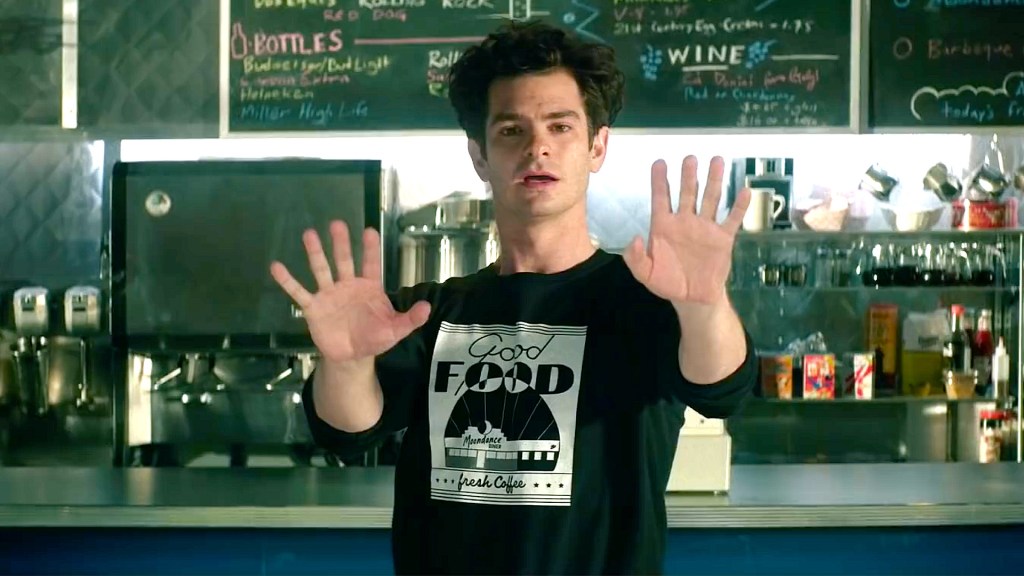
Dir: Lin-Manuel Miranda. Starring: Andrew Garfield, Alexandra Shipp, Robin de Jesús, Joshua Henry, Judith Light, Vanessa Hudgens. Cert 12, 115 minutes
Theatre kids are always a little insufferable. It’s just part of their DNA. And Tick, Tick… Boom! is created entirely by them and for them, adapted by Hamilton’s Lin-Manuel Miranda from a stage show by Rent’s Jonathan Larson. Inevitably, this will annoy some – they’ll find it all far too earnest, too shameless in its desire for likeability. But what other kind of person would seek a life where every emotion lives in search of a beat? Who else would be prepared, night after night, to bear their wounds and secret joys for all to see?
Still, Tick, Tick… Boom! saves itself from the navel-gazing brink by having both Larson’s writing, and Miranda’s staging of that writing, repeatedly acknowledge the narcissistic insularity of the Broadway world. Its premise reads like parody: a straight white guy drives himself to misery because he hasn’t written the next great American musical by the age of 30. He can’t believe the world didn’t fall head over heels for his last project, a futuristic rock opera titled Superbia. The “tick, tick” of the title is the invisible clock counting down to the fate of permanent obscurity.
Except, it isn’t. Not really. Larson was writing about his own life. Superbia was real, and Tick, Tick… Boom! was his autobiographical way to shoulder its failure (he’s played onscreen by Andrew Garfield). Larson would go on to write the great American musical of his generation, but would die from an aortic dissection on the day Rent was due to have its first preview performance. Miranda’s film finds a graceful balance between fact and fiction, framing art as a heightened form of self-obsession and the most magical and important thing in the world.
And why shouldn’t Miranda be allowed to celebrate his craft? He is the Larson of his own generation, Hollywood’s go-to music man, with that same urgent, electric drive to his work. This year alone, he’s seen his musical In the Heights adapted to film and contributed songs to the animations Vivo and Disney’s Encanto. The fact Tick, Tick… Boom! only now marks his directorial debut comes almost as a surprise. After this, will there be no more worlds to conquer? The film, as one might expect, is enthusiastically self-referential when it comes to Broadway tradition. Not only is composer Stephen Sondheim (Bradley Whitford with a withering look) treated practically as a living god, but Miranda never throws away his shot (get it?) when there’s a musical reference to be made – to the old, to the new, to his own work.
It wouldn’t be a stretch to say that this script (from Liang and co-writer Max Landis) is essentially a collection of storytelling gears, and it also wouldn’t be a stretch to point out how much this script does not conceal its awkward shape. From the beginning when Moretz is trapped in the turret, having to fend off objectification and fighting to be taken seriously, the script is mostly concerned with making sure you can relate to her experience, and that you care about the mysteries that are and are not methodically revealed. So if it’s not the sexism that gets you, it’s the impending threat of Japanese enemy fighter planes, or the snarling creatures that look like skinless, winged cats ripping up the plane as if it were a nice couch. These three obstacles that Garrett faces don’t entirely fit together, but the film is more amusing if you just accept them all.
Pieces of a Woman review – a home birth ends in tragedy
Vanessa Kirby excels in devastating exploration of grief and loss
by Markie Robson-ScottFriday, 08 January 2021https://www.facebook.com/plugins/like.php?href&send=false&layout=button_count&width=450&show_faces=false&action=like&colorscheme=light&font&height=21https://apis.google.com/u/0/se/0/_/+1/fastbutton?usegapi=1&size=small&hl=en-GB&origin=https%3A%2F%2Fwww.theartsdesk.com&url=https%3A%2F%2Ftheartsdesk.com%2Ffilm%2Fpieces-woman-review-home-birth-ends-tragedy&gsrc=3p&ic=1&jsh=m%3B%2F_%2Fscs%2Fapps-static%2F_%2Fjs%2Fk%3Doz.gapi.en_GB.tmPnhifxyTQ.O%2Fam%3DAQ%2Fd%3D1%2Frs%3DAGLTcCNwoIQ3FEHTItd0ffFEpbwP-CV1_g%2Fm%3D__features__#_methods=onPlusOne%2C_ready%2C_close%2C_open%2C_resizeMe%2C_renderstart%2Concircled%2Cdrefresh%2Cerefresh&id=I0_1627859056017&_gfid=I0_1627859056017&parent=https%3A%2F%2Fwww.theartsdesk.com&pfname=&rpctoken=14217321ShareFacebookTwitterEmail
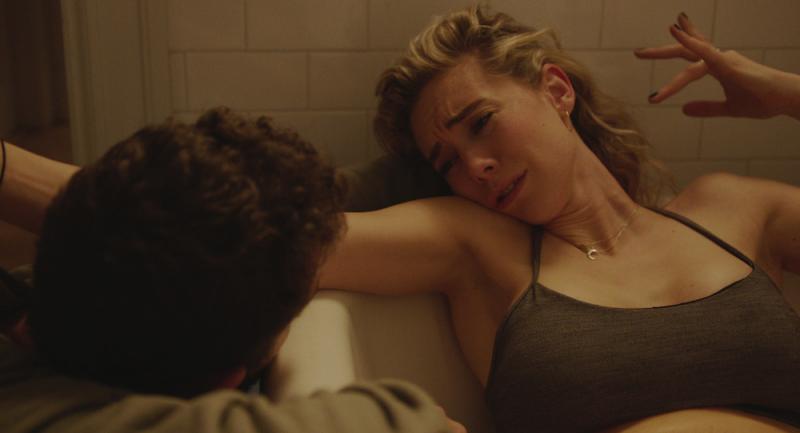
Before the birth: Sean (Shia LaBeouf) and Martha (Vanessa Kirby)Benjamin Loeb/Netflix
This is not a film to watch if you’re pregnant. One of the first scenes, a 24-minute continuous take of a home birth that ends in tragedy, is extraordinarily powerful and painful to watch – almost unbearable sometimes – and Vanessa Kirby as Martha, groaning and growling her way through a very realistic labour, is brilliant and unforgettable.
Director Kornél Mundruczó and his wife, writer Kata Wéber (White God, Jupiter’s Moon), wanted to share something of their own similar experience of loss and originally wrote a version for the stage – it premiered in Poland in 2018. But Wéber wanted to expand it into something more wide-reaching. Although not a complete success, it’s moving and shows how grief is perceived and co-opted by others.
Martha and Sean (an excellent Shia LaBeouf) are a Boston couple: he’s a construction worker on the bridges, has six years of sobriety under his belt and was in a Seattle grunge band back in the day. She’s posher, with an office job and a formidable Holocaust-survivor mother, Elizabeth (a marvellous Ellen Burstyn), who fiercely disapproves of Sean. In an opening scene, just after Martha leaves the office to start maternity leave, Elizabeth tries to “minimise” him, as he puts it, by buying them a car that, according to him, he could have bought himself.
Their relationship, though close, looks as if it might not withstand many knocks. During the labour, beardie Sean tries his best in a lukewarm way, getting water and rubbing Martha’s back when asked, and trying to distract her with some of his trademark feeble jokes: “Where does broccoli go to get a drink? To the salad bar.”
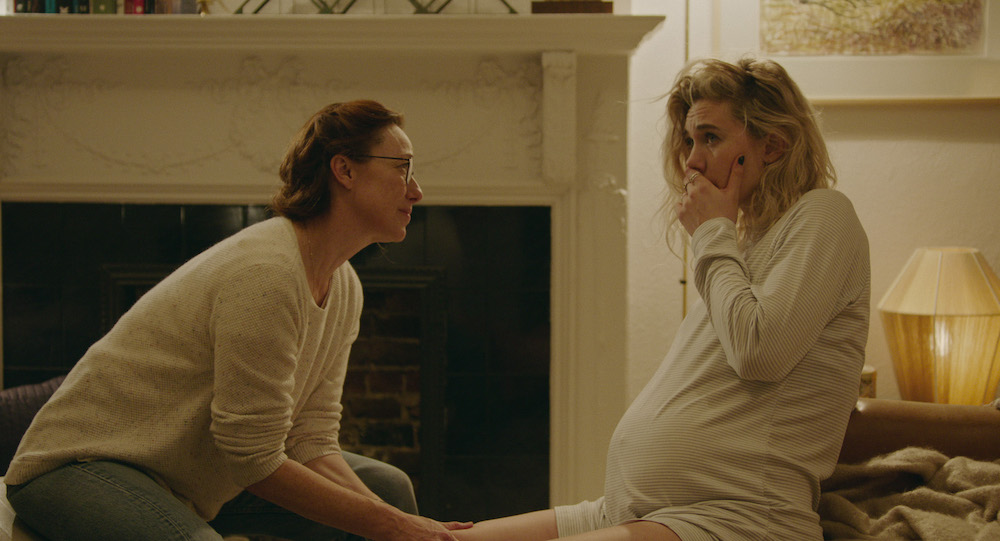 At first things seem to be ticking over. “We’re getting a little bit of a rhythm going,” says Sean, irritatingly, on the phone to Barbara, their appointed midwife. But she’s busy with another labour and a replacement, Eva (Molly Parker; House of Cards; pictured above), who they’ve met but don’t know well, takes over. Laughing inanely, she doesn’t inspire confidence and you want to shake the increasingly panicked smile off her face and yell, “Get the woman to a hospital.”
This birth scene is so visceral, so traumatising, that the second half of the film (executive produced by Martin Scorsese) is doomed in some ways to limp along in comparison, with some unsatisfactory loose ends in the narrative. But Kirby’s performance remains very moving, from her furious dignity at her first day back at work where her colleagues stare at her dumbly, to the misery of leaking breasts as she locks eyes with a child in a department store, and her lonely decision over the burial of her baby. The bureaucracy involved echoes the mundane first scene of her signing papers for the car.
Her mother, sister (Iliza Shlesinger) and Sean are bent on suing the midwife, who’s facing five years in prison, and Sarah Snook (Shiv in Succession) plays, to type, a hard-nosed lawyer, a cousin, who takes on the case: “You could win millions.” Martha feels alone and isolated and she and Sean can’t find common ground. He attempts, violently, to have sex with her (unfortunately you can’t help thinking about FKA twigs’s current lawsuit against LaBeouf). As devastated as Martha, he turns back to booze and cocaine. Their relationship disintegrates as does the apartment, with its dying spider plants, a sink piled up with dishes, a freezer empty apart from frozen vegetables that Martha uses to soothe her aching breasts.
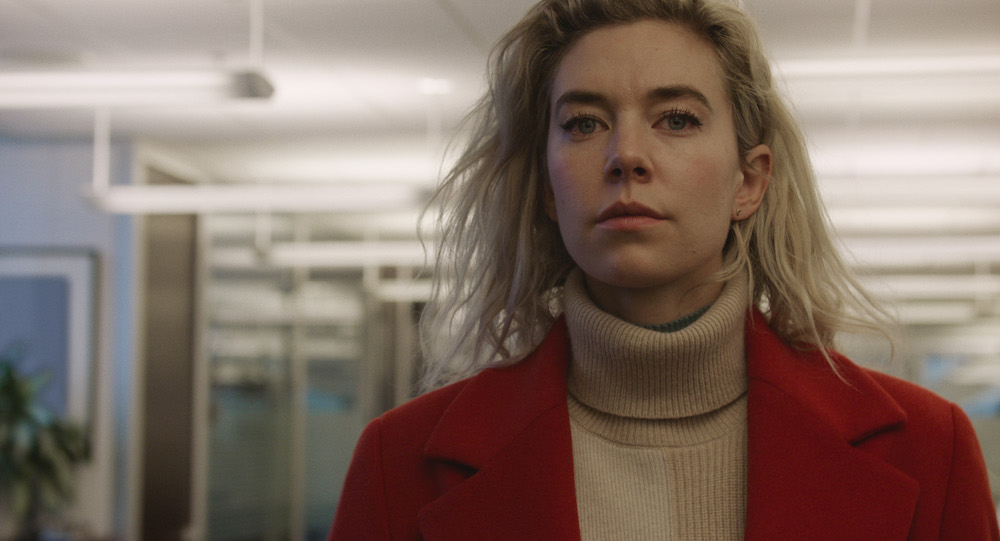 A family lunch underscores the distance between them all, though Elizabeth’s virtuoso speech to Martha about her own mother giving birth to her when hiding from the Nazis is a catalyst for change, albeit laced with cruelty. When Martha accuses her mother of only thinking about her own needs, Elizabeth retorts, “If you’d done it my way, you’d be holding your baby in your arms now.”
Elizabeth is so keen to get rid of Sean, who knows she thinks he’s boorish – “Now there’s a Scrabble word” – that she gives him a cheque. “Never come back,” she warns. This seems unlikely as they were, briefly, united in their enthusiasm over the court case. Martha even accuses them of teaming up against her. It’s a portrait, although not a very consistent one, of a family in crisis that devours its members, and it turns rather too fast into something more sentimental at the end.
The credits, intriguingly, thank Susie Orbach as well as the midwifery team at the Whittington Hospital, where Kirby shadowed an obstetrician and midwives for days – and the authenticity of her remarkable performance certainly shines through.


he script is smart enough to avoid the usual feelgood cliches and sentimental flourishes and Lloyd’s cast of plain-speaking British and Irish actors ensures that everybody remains firmly in touch with the gritty realities.
Going in blind, I quite enjoyed this movie. Sure, it has it’s shortcomings but no way near the hate it’s getting here. I don’t think this movie was intended for Turkish audiences, who are very vanilla most of the time when it comes to any form of art. I don’t know what this movie claimed to be during the advertising period but if you watch it expecting a “normie” comedy, you’ll be disappointed. That exact reason is why I enjoyed it. It can be called dark comedy-ish I guess, labels don’t matter to me. The art direction was quite beautiful and the acting was decent, as expected from a cast of veteran actors. Comparing this to the dumpster fire that was Leyla Everlasting is a blasphemy.





 Info-World-Hub
Leave a comment